Summary
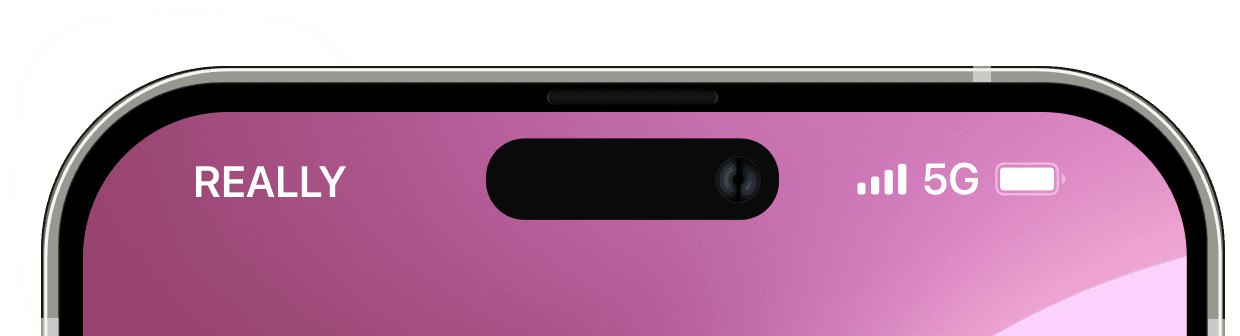
DeWi = Decentralized Wireless, a new model for mobile networks. REALLY DeWi has its own RAN (small cell towers), its own mobile core, and uses its own spectrum (including CBRS).
Seamless roaming with national coverage. Your REALLY pSIM/eSIM moves between REALLY DeWi and roaming partners (including T-Mobile) based on where the strongest service is, so you keep coverage everywhere.
On REALLY, DeWi sites connect to our PrivateCore™ (privacy-first mobile stack). Your phone attaches automatically, no app required.
Even more private on REALLY DeWi. When you’re on REALLY’s cell towers and core, your traffic stays inside REALLY’s privacy-first stack (no PII, no subscriber-identity mapping, no centralized identity-linked archive). Roaming still works, but DeWi gives you the strongest privacy posture end-to-end.
The critic’s question
“What does ‘DeWi’ even mean, and how would I actually use it?”
Short answer: DeWi stands for Decentralized Wireless—a standalone network made of local small cell towers (our RAN) and REALLY’s mobile core, on spectrum we operate (including CBRS). You don’t do anything special: your phone automatically attaches to DeWi where available and roams to partners (like T-Mobile) elsewhere. DeWi is additive to your experience and most private when you’re on our own radios and core. As a user you won’t know if your phone is connecting to T-Mobile, REALLY DeWi or other partners. It just works.
What is DeWi
A complete network:
RAN: Our own small cells/towers (indoor & outdoor).
Spectrum: We operate spectrum for these sites, including CBRS where appropriate.
Core: Sessions are handled by REALLY’s mobile core (policy, authentication, routing).
Standards-based: Your phone uses LTE/5G as usual—no special app or behavior required.
How DeWi works with nationwide coverage
Automatic selection: Your phone picks the best available service.
Roaming: When a DeWi site isn’t present, your pSIM/eSIM uses T-Mobile and other roaming partners for broad coverage.
Back and forth: As you move, your device hands over between DeWi and partners to keep you online.
When you’re on DeWi vs. roaming
On DeWi (REALLY cell towers + PrivateCore™):
Strongest privacy: no PII, no subscriber-identity mapping, no centralized identity-linked archive.
Local capacity where it’s needed (better indoor signal, smoother busy hours).
Other networks/ partners (T-Mobile):
You service nationwide, and internationally based on coverage.
The host keeps its own RF/ops logs, but we don’t give them PII or an identity mapping, and DeWi is available whenever you’re in range again.
How you’ll use it (day-to-day)
Just carry your phone. It attaches to DeWi when available.
Move around freely. It roams to partners (e.g., T-Mobile) when you leave a DeWi area.
No app, no switches. Everything is standards-based and automatic.
Why DeWi helps
Stronger indoor coverage where macro towers struggle (brick, steel, basements).
More consistent speeds in busy places, local capacity relieves congestion.
Faster dead-zone fixes, small cells are quicker to deploy than big towers.
Best privacy posture, traffic remains within REALLY’s own radios and core whenever you’re on DeWi.
What DeWi is not
Not a plug-in or marketing label. It’s a network with our own spectrum, RAN, and core.
Not a tracker of people. We operate under Zero-Trust Protocol: no PII, no subscriber-identity mapping, no centralized identity-linked archive.
See progress & get involved
Track rollout & request coverage: Check the public map and stats at explorer.really.com (infrastructure & coverage only; no user tracking).
Host a site: Apply to host a small cell (we assess power, mounting, backhaul).
Community bundles: Neighborhoods/campuses can coordinate multi-site deployments.
Honest limits
Physics still apply. Backhaul, local spectrum, and building materials affect performance.
REALLY DeWI is not everywhere like major carriers, which is why we partner with major networks today. See our current coverage at explorer.really.com
Permitting/placement take time. Municipal and landlord approvals can be the long pole.
Device differences matter. Newer modems/antennas benefit most from added capacity and band support.
Proof & verification (in progress)
ZTP (Zero-Trust Protocol) public spec: no PII, no subscriber-identity mapping, no centralized identity-linked archive, short retention.
Retention Matrix & Interface Inventory: what we keep (briefly) and fields that never cross (no identity joins).
Explorer telemetry: infrastructure-only status (coverage layers, uptime class, pipeline steps).
Before/after case studies: Aggregate speed/latency and reliability improvements where DeWi went live.
Quick glossary
DeWi (Decentralized Wireless): A standalone network built from many local small cells connecting to REALLY’s mobile core on REALLY-operated spectrum (incl. CBRS).
RAN: Radio Access Network (the cell sites your phone talks to).
Mobile core: The real-time engine that authenticates your SIM/eSIM, applies policy, and routes voice/SMS/data.
CBRS: Citizens Broadband Radio Service band used to deploy local LTE/5G capacity.
Explorer: Public map/stats at explorer.really.com showing infrastructure and rollout (no user data).
Join the only carrier that makes privacy non-negotiable.