


Why Social Media Privacy Is a Myth in the Age of Data Collection
Your favorite apps don’t just know what you like. They know where you’ve been, who you talk to, and how long you stared at that post you didn’t even like. That’s not an exaggeration. It’s the business model.
Every scroll, click, and pause tells a story—and social platforms are listening. They collect your data. What feels like casual browsing is actually fueling a highly profitable system built around your digital behavior.
And we’ve seen how that data can be used. The Cambridge Analytica scandal, which harvested the profiles of 87 million users, showed just how easily social media data can be repurposed for manipulation, profiling, and influence—without users ever realizing it.
The real issue? Most people have no idea how much data is being collected or what it’s being used for. And even less control over where it ends up.
In this blog, we’ll break down the kinds of data social apps are collecting, why it matters more than you think, and what you can actually do to protect your privacy.
What Data Are Social Apps Collecting?
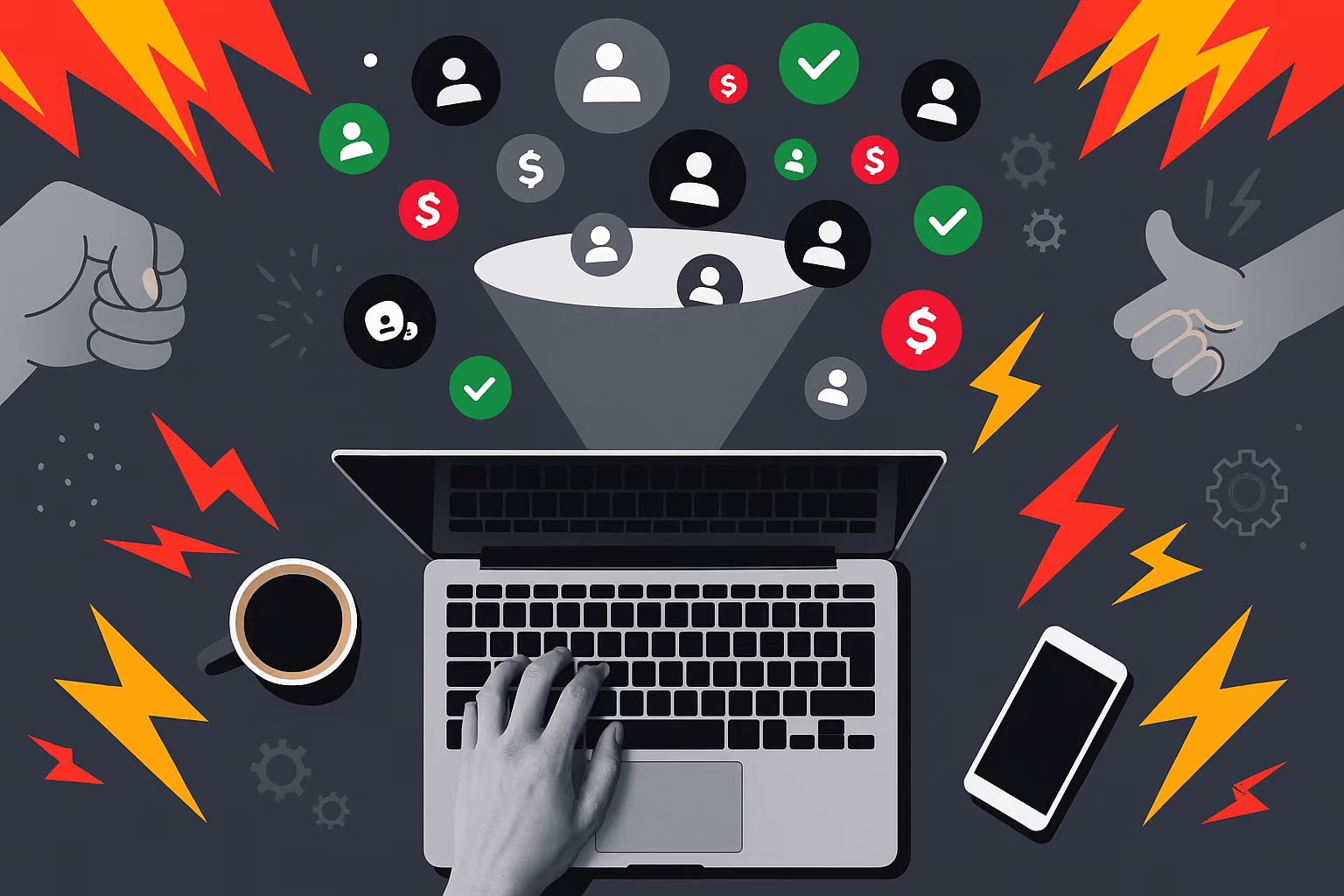
Illustration of a laptop collecting user data through a digital funnel, with icons for profiles, messages, and dollar signs representing social media tracking and data collection
Most social media users know that apps collect some information—but the full extent of social media privacy data collection goes far beyond what people expect. Behind the scenes, social media platforms collect a wide range of data types that often include personally identifiable information, behavioral insights, and even metadata from your photos or social media posts.
The Data You Share Directly
When creating social media accounts, you hand over basics like your name, birthday, phone number, and email. But the information collected doesn’t stop there. Platforms also log your home address (if shared), political views, social media profiles, and even your user’s friends list if contact syncing is enabled.
Other personal data, like social media activity and content data (status updates, messages, photos), becomes part of the profile used for targeted advertising and algorithmic content curation.
The Data You Don’t See Being Collected
Much of the data collected comes from how you use the app—not just what you post. This includes user interactions such as clicks, watch time, scrolling behavior, and the type of content you engage with. These details help social media companies analyze your user interests, often more accurately than your closest friends.
Apps also track device information, location history, and behavioral signals like typing speed or UI gestures. Some go further, embedding trackers that follow you across multiple platforms—even after you’ve left the app.
Hidden Data Mining and Third-Party Tracking
Some of the most concerning data collection practices involve invisible tracking tools. Apps can extract metadata from your camera roll, access sensitive information stored in EXIF files, or use third-party cookies to monitor you across the web. This consumer data is then sold or shared with advertisers and data brokers, raising serious data privacy concerns.
In some cases, even deleted or older posts may still be stored or used to train AI models, despite unclear privacy policies or limited user consent.
For many users, the lack of transparency has made it difficult to know what private information has been stored, sold, or exposed. In the event of data breaches or account takeovers, this information could fall into the wrong hands, putting your sensitive data at risk.
The Scale and Value of Data Collection
Social media platforms do more than connect people—they operate massive data engines built to track and monetize behavior.
On average, platforms collect around 20 types of information per user. This ranges from personal identifiers like your name and contact info to behavioral insights based on social media activity, preferences, and how you engage with content across apps.
For companies like Meta, this isn’t optional. Roughly 98% of their revenue comes from advertising, which depends entirely on how well they can target users. That targeting is driven by the volume and precision of the data collected.
Globally, the surveillance-adtech economy is valued at over $227 billion. Its foundation? The constant stream of consumer data and social media profiles that users share—often without realizing how much they're giving up.
Despite growing data privacy concerns, many users still don’t know how their data is being used, stored, or sold. The lack of transparency leaves people vulnerable to manipulation, misuse, and exposure.
Why Privacy Is a Myth
The idea that you control your data on social media is mostly an illusion. While social media platforms offer privacy settings, the reality is that much of your personal data is still being collected, analyzed, and shared behind the scenes.
- Social media data can be weaponized: The more you share online, the easier it becomes for bad actors to profile you, spread disinformation, or exploit your behavior for profit or influence.
- Abusive data practices put personal safety at risk: Leaked or sold customer data can lead to phishing scams, stalking, or even identity theft—especially when Americans’ personal data is shared without clear consent.
- Government access is often unchecked: Some data protection loopholes allow third-party brokers to sell data to government agencies without warrants, raising major user privacy concerns.
- Poor privacy policies make users vulnerable: Many platforms fail to check privacy policies for clarity or fairness, giving users little insight into how their data is stored, shared, or retained.
What You Can Do: Practical Privacy Steps
Review Your App Permissions
Start by limiting what apps can access. Regularly check which platforms have permission to use your camera, microphone, location, or contacts. Many users forget that social media apps often request more than they need, quietly collecting personal data in the background.
Use Privacy-Focused Tools
Consider tools that prioritize data protection. VPNs, encrypted browsers like DuckDuckGo, and private messaging apps like Signal can reduce how much social media data is collected from your everyday activity.
Enable Multi Factor Authentication
Turning on multi factor authentication adds added protection to your accounts. It helps prevent bad actors from gaining access even if your password is compromised, reducing the risk of cyber threats and phishing scams.
Use a Password Manager
A password manager helps you generate and store unique passwords for each login. This protects you from data breaches and reduces reliance on reused credentials, which are often exploited in hacks.
Think Before You Share
What you share online stays online. Avoid posting sensitive information like your location, daily routine, or personal identifiers. Even older posts can be scraped and used without your knowledge.
Delete Unused Accounts
If you’ve stopped using a platform, delete the account entirely. Dormant social media accounts still store customer data, which may be vulnerable to future breaches.
Support Better Privacy Laws
Pay attention to evolving privacy laws and policies. Support initiatives that promote competition, increase transparency, and give consumers more control. The Federal Trade Commission continues to push back against abusive data practices, but public awareness helps move the needle.
Privacy Isn’t a Given—It’s a Choice
Social media platforms have made it easy to connect, but at the cost of something far more personal: your data. From every scroll to every click, the amount of personal information collected is far greater than most users realize.
Now is the time to reassess what you’ve shared, how your data is being used, and what steps you can take to stay in control. Check your app permissions, use a password manager, and enable multi factor authentication. More importantly, think twice about what you post—and what platforms gain in return.
If you want a clearer picture of where things are heading, take a look at these 2025 data privacy trends shaping the way the digital world is protecting you. It’s a reminder that change is happening—but your privacy still depends on the choices you make.
Because in 2025, privacy doesn’t come built in. It’s something you take back, one setting at a time.
compare phone plans and save up to 80%


.svg)
.svg)

compare your carrier and save up to 63%


.svg)

.svg)

